In 2026, images are everywhere.
With a few words and a few seconds, AI can generate scenes of astonishing technical beauty—perfect lighting, perfect composition, perfect symmetry. The visual result can be flawless. And yet, the more these images fill our screens, the more noticeable their silence becomes.
They are complete. But they do not remember anything.
When I created The Roots of Baltic Spirit VII, I wasn’t simply arranging forms or colors. I was returning to something older than technique.
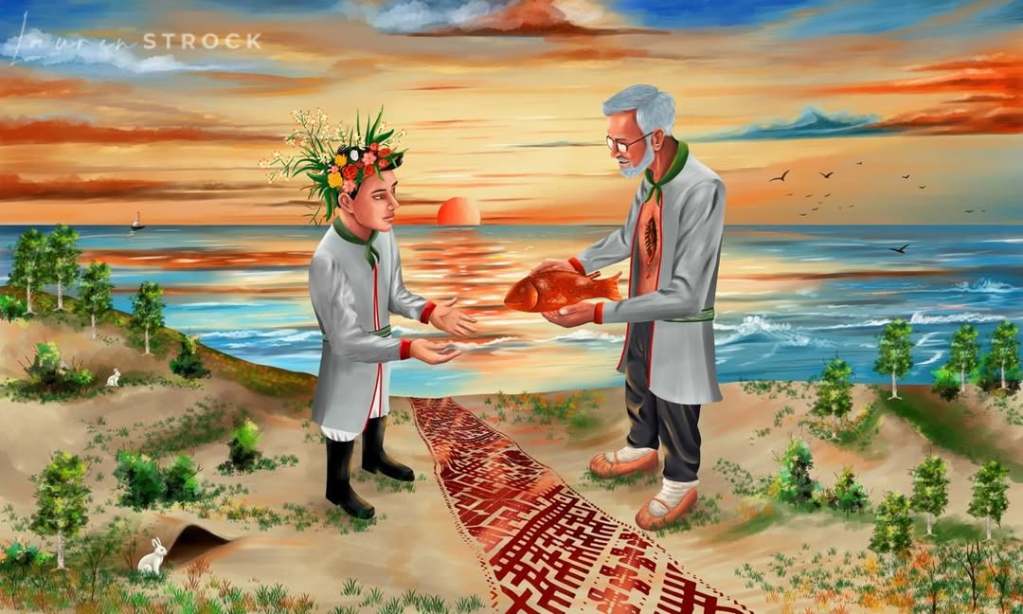
In this scene, an elder offers his heart as a sacred fish—a symbol of sustenance and survival—while the youth, crowned with wildflowers and grounded in nature, receives more than nourishment. What passes between them is heritage. Memory. Continuity. The path beneath their feet, woven with Baltic patterns, reflects endurance across generations.
These decisions did not come from a prompt for my other digital works like The Roots of Baltic Spirit III and IV. They came from reflection.
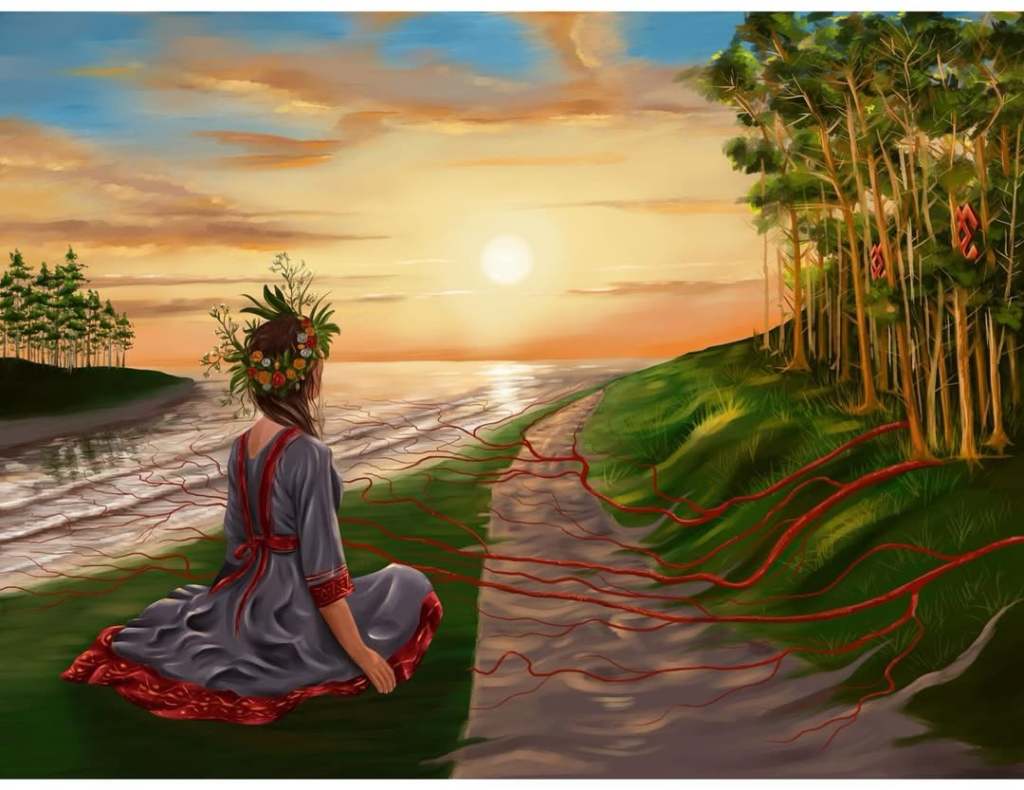
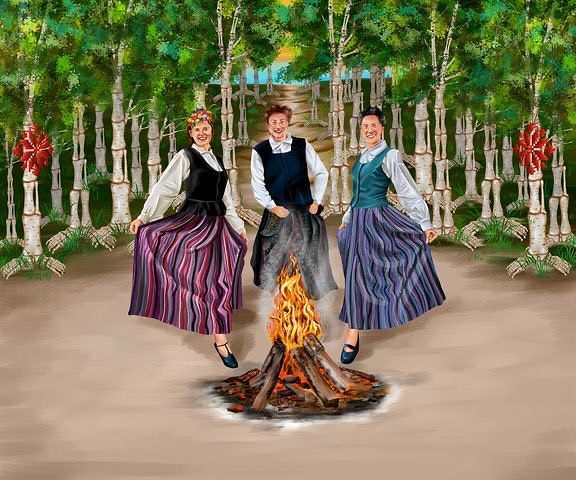
This is the quiet difference between an image and a story.
AI can generate visuals by drawing from patterns across millions of existing works. It can echo styles, simulate textures, and produce endless variations. But it cannot carry personal history. It cannot decide that a symbol matters because it reflects ancestry, belief, or lived experience. It cannot create from longing, or from remembrance, or from the desire to preserve something fragile and meaningful.
It can make the picture. But it cannot tell the story behind why the picture must exist.

As generative imagery becomes more abundant, audiences are beginning to feel this distinction more clearly. Perfection, once rare, is now everywhere. And when perfection becomes common, people begin to seek something else. They seek intention. They seek presence. They seek evidence of a human hand guided by a human mind.
Art has never been defined solely by how it looks. It has always been defined by what it carries.
Every artist makes choices that extend beyond aesthetics. What to reveal. What to conceal. What to honor. These choices form a language that speaks across time, allowing one person’s inner world to reach another’s. This is what gives art its lasting power—not its precision, but its perspective.
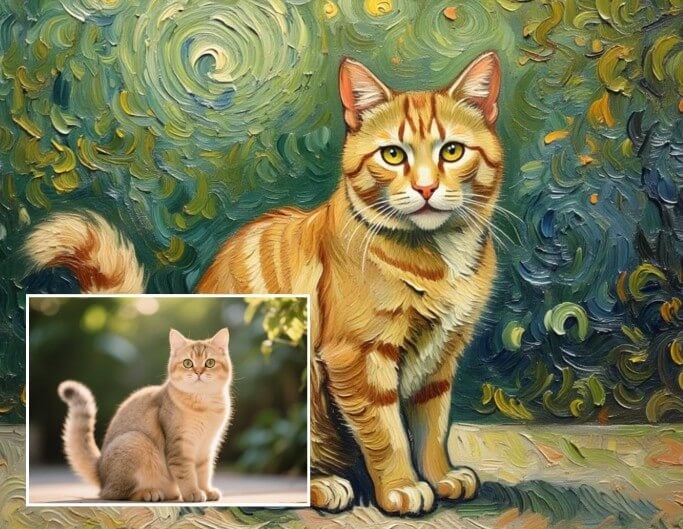
Technology will continue to evolve, and it will remain a valuable tool. I work digitally myself, and digital tools have allowed me to bring visions to life that would otherwise remain unseen. But tools do not replace meaning. They only extend the artist’s ability to express it.
In the end, what people remember is not the perfection of an image, but the truth inside it.
Because while AI can generate endless pictures, only a human being can give them a soul.

You must be logged in to post a comment.