by Lauren Strock | Research credit: Judith of Artistcoveries
Most of us know Edvard Munch through one unforgettable image — The Scream. It’s the face of anxiety, despair, and inner torment, and has become one of the most iconic works of modern art. But how often do we pause and consider what else Munch created? The truth is, there’s a whole world of art beyond The Scream, and thanks to the research and writing of Judith from Artistcoveries, I had the pleasure of exploring it more deeply.
Munch’s career wasn’t defined by a single masterpiece. He was incredibly prolific, producing thousands of works — including many haunting, beautifully expressive portraits. One standout is The Brooch, a captivating image of British violinist Eva Mudocci, who was not only Munch’s muse but also a woman of fascinating connections and rumored romances with both Munch and Henri Matisse.

Edvard Munch, The Brooch. Eva Mudocci, 1903. Lithograph.
Image courtesy of the Google Art Project
Right now, a major exhibition at London’s National Portrait Gallery is showcasing 45 of Munch’s portraits, offering us a rare opportunity to see this quieter, more intimate side of his work. Portraits of friends, family, patrons, and self-portraits reveal a web of personal relationships that challenge the usual image of Munch as a solitary, tortured figure. According to curator Rosie Broadley, the exhibition was designed “to shine a new light on Munch’s deep social connections” — a side of the artist many of us have never seen.
Munch’s story begins in 1863 in Norway. Sickly from childhood, he spent much of his youth in bed. At age 17, during yet another illness, he wrote in his diary: “It is now my decision to become a painter.” And from that moment, he never looked back, spending the next six decades building a remarkable artistic legacy.
There’s no denying Munch’s struggles. He wrestled with mental illness, alcoholism, and emotional turmoil — and he documented those battles through his art. He even painted a portrait of his own psychiatrist, Dr. Daniel Jacobsen. But it would be a mistake to reduce his story to only pain and madness.

Edvard Munch, Professor Daniel Jacobson, 1909.
Oil on canvas
Munch was complex. He was passionate, reactive, social, and deeply affected by the world around him. His art reflects all of this. While some works convey deep unease and emotional unrest, others — like Small Lake with Boat — offer glimpses of calm and peace. These quieter moments are just as telling as his more dramatic pieces.
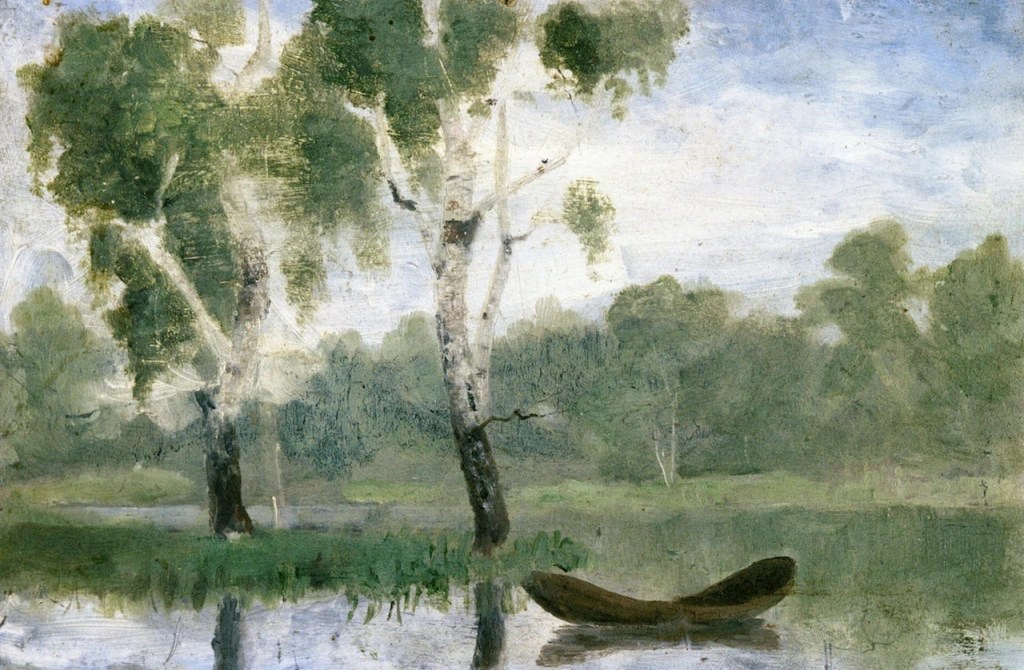
Edvard Munch, Small Lake with Boat, 1880.
Oil on canvas
What I found particularly compelling — again, thanks to Judith’s original piece — was learning about Munch’s time in Paris. He was inspired by contemporaries like Vincent van Gogh, Paul Gauguin, and Henri de Toulouse-Lautrec. Interestingly, he even created his own version of Starry Night. That parallel with van Gogh is striking: two artists grappling with inner darkness, yet still creating works filled with light, motion, and emotion.

“Starry Night” (1922–24) by Edvard Munch.
Image courtesy of the Munch Museum, Oslo
As I reflect on Munch’s legacy, it’s clear he was much more than the scream of nature. He was a visionary who lived fully in both suffering and beauty. His work invites us to look more closely — not just at his paintings, but at the full human experience they represent.
If The Scream is all you’ve ever known of Edvard Munch, I encourage you to look again. There’s a broader, richer story waiting behind that famous face — one of connection, introspection, and artistic brilliance.
Special thanks to Judith of Artistcoveries for her thoughtful blog post that inspired this reflection. Her research and perspective added so much to my understanding of Munch and his work.

You must be logged in to post a comment.