This blog post was inspired by an article from The Art Newspaper.
The Louvre Museum in Paris reopened three days after one of the boldest robberies in modern history. Jewelry worth 88 million euros was stolen in less than eight minutes. The thieves are still missing.
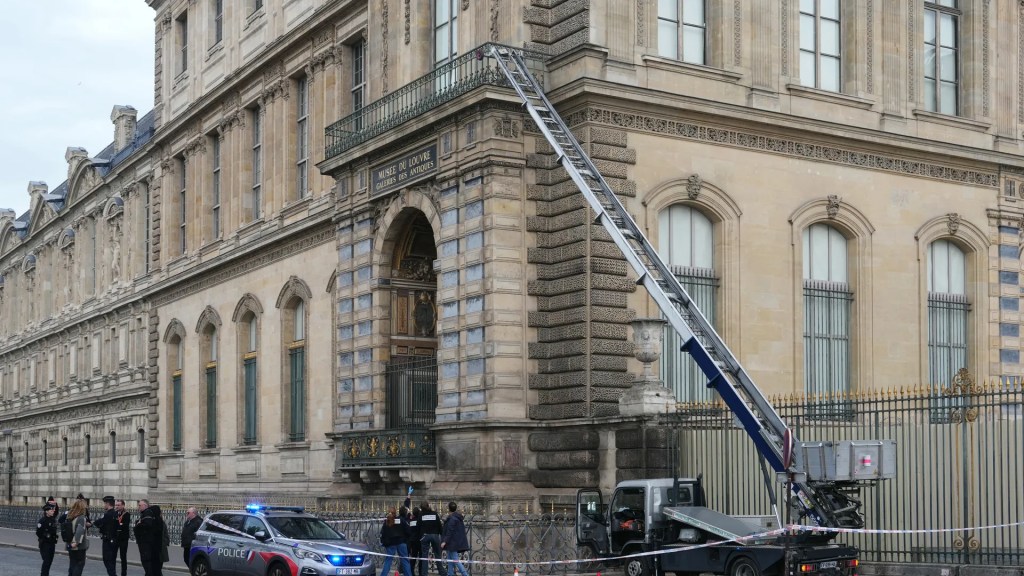
At 9:30 a.m. on Sunday, four masked men used a truck with a mechanical ladder to reach a balcony near the River Seine. Two of them cut through a glass window with power tools and entered the Apollo Gallery. They threatened staff, smashed two display cases, and took eight royal jewels. The building was evacuated.
Among the stolen pieces were a diamond and emerald necklace given by Emperor Napoleon to his wife, a tiara worn by Empress Eugénie, and jewelry once owned by Queen Marie-Amélie. A damaged crown belonging to Eugénie was found on the thieves’ escape route.

Photo: Louvre Museum
They tried to set their vehicle on fire before fleeing on scooters. A quick-thinking employee stopped the blaze.
I learned how fast precision and planning can overpower even the most guarded spaces. Eight minutes were enough to bypass the systems of the world’s most visited museum.

the wife of King Louis Philippe I. Photo: Louvre Museum
When the Louvre reopened on Wednesday, visitors were welcomed back. The Apollo Gallery stayed closed. President Emmanuel Macron ordered faster implementation of new security measures.
Museum director Laurence des Cars admitted to the French Senate that the Louvre had “real structural issues.” She said she wanted to close parts of the museum for refurbishment. She added that museums “are not and never will be fortresses” because they are meant to be open to the public.
A preliminary report found that one-third of Louvre rooms lack CCTV coverage. The main alarm in the Apollo Gallery failed to ring. Some staff said the system had been broken for weeks. The culture ministry confirmed that the wider alarms went off and staff followed protocol by calling security forces and ensuring visitors’ safety.
I learned that even the best institutions depend on maintenance, not reputation. Systems age. Problems ignored become failures waiting to happen.
Unions and politicians renewed criticism of the government’s handling of museum security. Workers said they had warned management about staff cuts and malfunctioning systems. Over 200 positions have been eliminated since 2010.
This theft follows other major museum crimes in Europe. In 2019, thieves stole 100 million euros worth of jewels from Dresden’s Green Vault. In 2024, rare artifacts were stolen from museums in Paris and Limoges. The Louvre heist fits the same pattern: organized, fast, and planned.
Investigators believe the gang acted under orders from a larger criminal network. France’s police anti-gang brigade is leading the case. Interior Minister Laurent Nunez said he has “every confidence” the thieves will be caught.
See, art security is not about cameras or locks alone. It is about attention, priorities, and respect for what a museum protects.
The Louvre is preparing a one billion euro renovation plan that includes an underground complex near the Mona Lisa. But for now, what the museum needs most is not expansion. It is vigilance.
Every theft is a reminder that history must be guarded, not assumed safe.

You must be logged in to post a comment.